Your Gut Is a Boss — And It’s Telling Your Brain What To Do
Your gut may be running the show. New research reveals how gut health directly affects brain function, stress, and aging — and what active agers can do about it.
Bruce R Black
1/25/20262 min read
Your Gut Is a Boss — And It’s Telling Your Brain What To Do
For years, we were told the brain was the CEO of the body.
Turns out… it’s more like middle management.
New research in aging and longevity is making one thing very clear: your gut is running meetings behind your back, sending messages that affect your mood, memory, stress levels, inflammation, and how gracefully you age.
If your brain feels foggy, anxious, tense, or oddly unmotivated, it may not be “all in your head.”
It might be coming from your lunch.
🦠 The Gut–Brain Hotline (Yes, It’s Real)
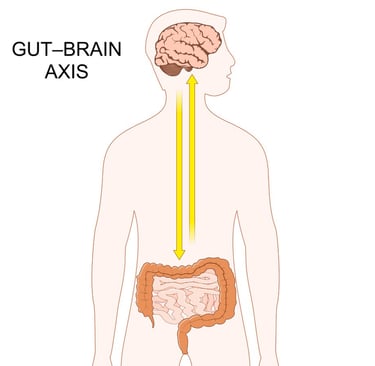
Scientists now understand that the gut and brain are in constant two-way communication through what’s called the gut–brain axis. This system uses:
The vagus nerve (a biological group chat)
Immune signaling
Hormones and neurotransmitters
Gut bacteria metabolites (tiny chemical emails)
In fact, about 90% of serotonin — the neurotransmitter associated with calm and well-being — is produced in the gut, not the brain.
Your brain doesn’t just think thoughts.
It reads signals from your digestive system all day long.
🧠 What the New Research Is Showing
Recent studies in aging populations suggest that changes in gut bacteria are strongly linked to:
Brain inflammation
Cognitive decline
Anxiety and stress reactivity
Energy regulation
Even how resilient the nervous system becomes with age
In simple terms:
An unhappy gut makes the brain twitchy, foggy, and tired.
A resilient gut?
That’s like having a calm, experienced advisor whispering, “We’ve got this.”
🧘 Why This Matters for Active Agers
As we age, a few things naturally happen:
Gut bacteria diversity decreases
Digestion slows
Stress sensitivity increases
Recovery takes longer
That doesn’t mean decline is inevitable — it means inputs matter more than ever.
What you eat, how you move, how you breathe, and how often you stress-scroll the news all affect your gut…
which then affects your brain.
This explains why many people say:
“I’m doing the workouts, but I still feel tense and restless.”
The nervous system may be underfed at the gut level.
🥦 The Boss Likes Simple Rules
The good news?
Your gut doesn’t want perfection. It wants consistency and calm.
Research consistently supports a few boring-but-effective habits:
Fiber-rich foods (plants, beans, veggies — yes, even the unsexy ones)
Fermented foods (yogurt, kefir, sauerkraut, kimchi)
Regular movement (walking and light strength work beat intensity marathons)
Slow breathing (activates the vagus nerve — your gut’s favorite switch)
Predictable routines (your gut loves boring schedules)
Translation:
You don’t need a cleanse.
You need a rhythm.
🛡️ Where Still Warrior Fits In
This is where Still Warrior training quietly shines.
Slow, controlled movement…
Isometric holds…
Calm nasal breathing…
These aren’t just joint-friendly — they signal safety to the nervous system, which directly improves gut-brain communication.
When the body feels safe, the gut stops panicking.
When the gut calms down, the brain follows.
No yelling required.
🧠 Final Thought: Who’s Really in Charge?
You don’t need to “hack” your gut.
You need to stop fighting it.
Feed it real food.
Move with intention.
Breathe like nothing is chasing you.
Do that, and your gut will happily continue running the show —
while your brain finally gets to do what it does best:
Think clearly.
Feel steady.
And enjoy the ride.
© 2025. All rights reserved.
"Disclaimer: The fitness and exercise information provided on this website is intended for educational purposes only. It is not a substitute for professional medical advice, diagnosis, or treatment. Consult your physician or a qualified health provider before starting any exercise program. The use of any information provided on this site is solely at your own risk. We do not assume liability for any injuries or health issues that may result from using our content."