Why Trying Harder Made Me Skip My Workouts
I kept skipping workouts by trying too hard. At 63, I found a smarter strength routine that finally stuck—plus a free tracker to keep it simple.
Bruce R Black
1/14/20262 min read
Why Trying Harder Made Me Skip My Workouts
(And What Finally Fixed It)
For a while, I thought I was doing everything right.
I wanted to get stronger, so I kept adding weight.
More resistance. More effort. More grit.
And then something strange happened.
I started skipping workouts.
Not because I was lazy.
Not because I didn’t “want it badly enough.”
But because my workouts had quietly turned into appointments with misery.
The mistake I didn’t see coming
Here’s what I learned the hard way:
If your workout feels hard enough to dread, your nervous system will eventually veto it.
Every time I cranked up the resistance, the session became:
Longer
Harder
More draining
Easier to postpone
Eventually, my brain started negotiating:
“Let’s just do it tomorrow.”
“You’re tired today.”
“Skipping one won’t matter.”
And that’s how trying harder actually made me train less.
Strength training after 60 is not about proving anything
At 63, strength training has a different job description.
It’s not here to:
Impress anyone
Chase personal records every week
Leave me sore, wrecked, or fried
Its job is to:
Keep me strong
Keep my joints happy
Keep me consistent
Support the rest of my life
Once I understood that, everything changed.
The rule that fixed everything
I stopped asking:
“How much weight should I be lifting?”
And started asking:
“What workout could I repeat forever without dreading it?”
That question changed how I trained.
Instead of max effort, I focused on:
Moderate resistance
Slow, controlled reps
Leaving 2–3 reps in the tank
Ending workouts feeling better, not worse
Strength still improved.
Consistency skyrocketed.
The twice-weekly workout that finally stuck
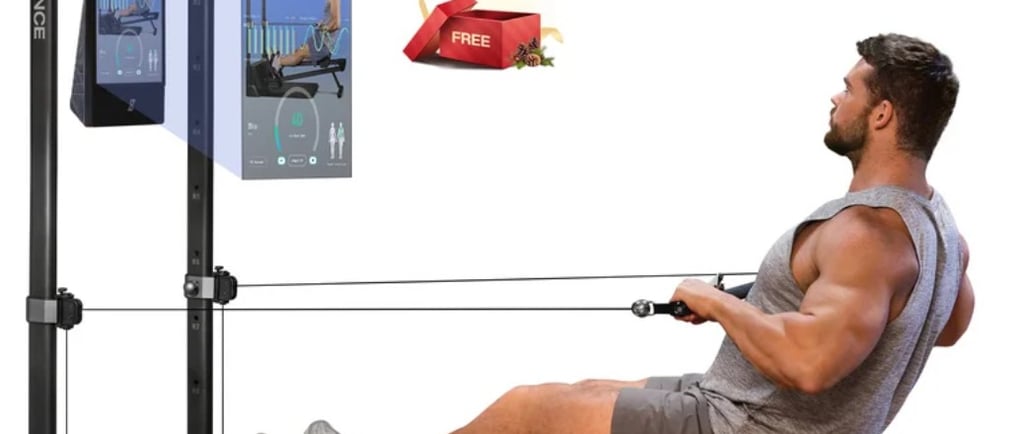
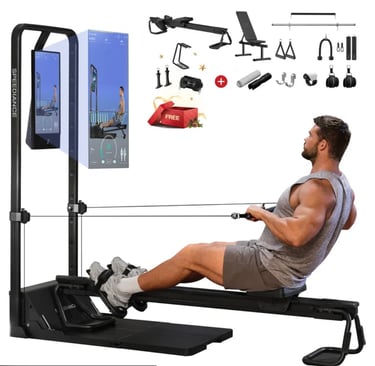
This is the exact routine I now use with my Speediance smart gym or Dumbbells, twice per week.
Each session takes about 10–15 minutes.
No punishment. No heroics.
Day A — Lower Body + Push
Assisted Squat
2–3 sets of 6–8 slow repsChest Press
2 sets of 6–8 repsOverhead Press (light)
2 sets of 5–6 controlled repsCore Hold or Anti-Rotation Hold
2 rounds of 20–30 seconds
Day B — Hinge + Pull
Romanian Deadlift
2–3 sets of 6–8 repsRow (seated or standing)
2 sets of 6–8 repsLat Pulldown
2 sets of 6–8 repsFarmer Carry or Static Hold
2 rounds of 20–30 seconds
The most important rule
Every set ends with 2–3 reps still in reserve.
If I feel like I could do more, I stop.
That’s not weakness.
That’s how strength compounds without burnout.
Why this works when everything else failed
This approach works because it respects reality:
Motivation is fragile
Recovery matters more with age
Consistency beats intensity
Your nervous system remembers pain
When workouts feel safe, calm, and doable—
you don’t need willpower.
You just show up.
The tool that keeps me honest (and calm)
To make sure I don’t drift back into “trying too hard,” I built a simple strength-tracking spreadsheet.
It:
Tracks resistance, reps, and effort
Suggests when to increase, hold, or reduce load
Removes ego from the decision
Protects consistency
🎁 Free download
I’m giving this tracker away for free here:
👉 Download the Progress Tracker Once the sheet opens, Click the File menu, then Make a copy.
If a workout tracker ever makes you feel bad—it’s doing the wrong job.
This one is designed to keep you training for life.
Final thought
If you’re skipping workouts, it’s not because you’re lazy.
It’s because you made them too hard to love.
Make them easier to start.
Easier to finish.
Easier to repeat.
That’s how strength actually lasts.
© 2025. All rights reserved.
"Disclaimer: The fitness and exercise information provided on this website is intended for educational purposes only. It is not a substitute for professional medical advice, diagnosis, or treatment. Consult your physician or a qualified health provider before starting any exercise program. The use of any information provided on this site is solely at your own risk. We do not assume liability for any injuries or health issues that may result from using our content."