
The Simple Strength Log That Actually Makes You Stronger
Track your workouts the smart way. Learn how to use a simple Google Sheets strength log to guide progression, build strength, and avoid plateaus.
Bruce R Black
1/1/20263 min read
The Simple Strength Log That Actually Makes You Stronger
(And Doesn’t Yell at You)
Most workout programs fail for one simple reason:
They don’t tell you what to do next time.
You lift.
You sweat.
You feel productive.
Then you come back a few days later and think:
“What weight did I use last time… and was it hard or am I just tired today?”
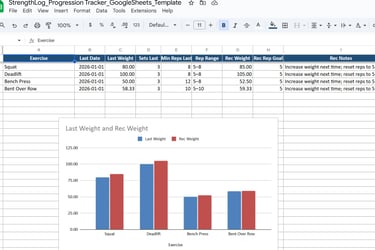
That’s where this StrengthLog-Lite Progression Tracker comes in.
It’s a simple Google Sheet designed to do one thing very well:
help you progress—without overthinking, ego lifting, or burning out.
What This Sheet Does (In Plain English)
This tracker uses a double-progression system, which is just a fancy way of saying:
First, earn more reps.
Then, earn more weight.
No guessing.
No max testing.
No “today felt heavy so I panicked.”
Just calm, steady progress—the Still Warrior way.
How to Use the StrengthLog-Lite Sheet
Step 1: Set Up Your Exercises
On the Settings sheet:
Enter the exercises you actually do
Set a rep range (for example, 8–12 reps)
Choose a weight jump (5 lbs, 2.5 lbs, or whatever makes sense)
This becomes your personal rulebook. The sheet doesn’t judge. It just remembers.
Step 2: Log Each Workout (This Takes 60 Seconds)
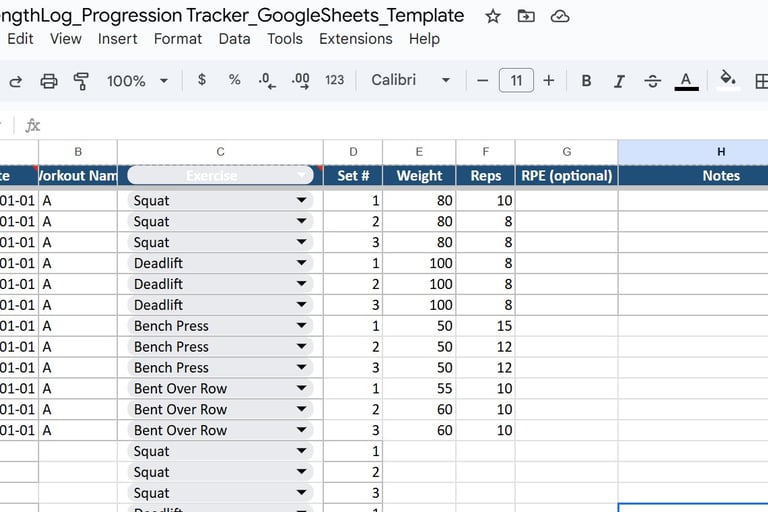
On the Log sheet:
Enter the date
Choose the exercise
Enter weight, reps, and sets
Optional: add notes (sleep, stress, “dog woke me at 4am”)
You don’t need perfection.
You just need honesty.
Step 3: Let the Sheet Suggest Your Next Workout
This is the magic part.
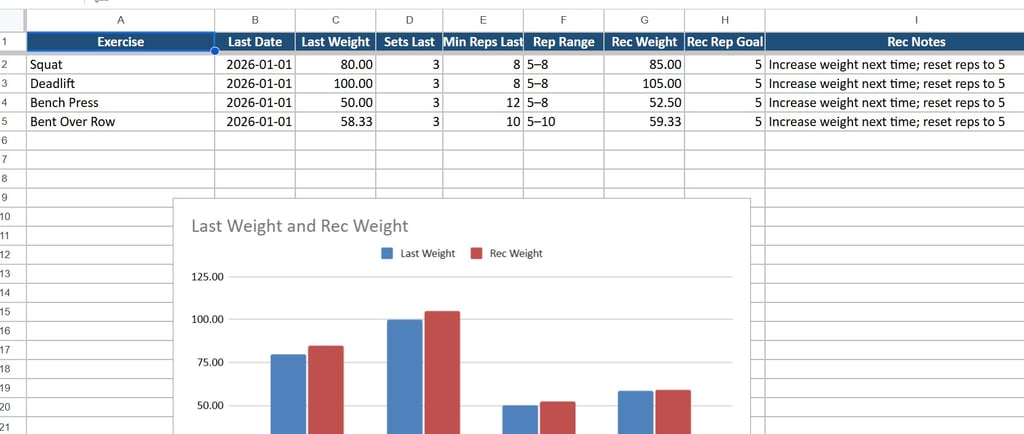
On the Next Workout sheet, the tracker:
Looks at your recent performance
Checks if you hit the top of your rep range
Suggests:
Stay at the same weight and add reps, or
Increase weight and reset reps
No emotions involved.
No ego involved.
Just data quietly doing its job.
The Progression Logic (Why This Works)
Here’s the rule baked into the sheet:
Didn’t hit the top of your rep range?
→ Stay at the same weight next time and try to add reps.Hit the top of the rep range for all sets?
→ Increase weight next workout and drop reps back to the low end.
This keeps you in the sweet spot:
Enough challenge to stimulate muscle
Not so much that recovery falls apart
It’s strength training that respects your joints and your nervous system.
Why Tracking Progression Matters (Especially After 40)
Let’s be honest.
As we get older, recovery becomes a currency.
You don’t want to waste it.
Tracking progression helps you:
1. Train Smarter, Not Louder
You stop guessing.
You stop overshooting.
You stop repeating the same weights for months “because it felt fine.”
2. See Progress Even When It’s Subtle
Progress isn’t always adding 20 lbs.
Sometimes it’s:
One more rep
Better control
Less fatigue
The sheet makes those wins visible.
3. Avoid Plateaus (and Injuries)
Random training leads to random results.
Planned progression leads to calm consistency—and fewer “why does my shoulder hate me?” moments.
4. Build Confidence
There’s something deeply grounding about knowing:
“I am stronger than I was last month.”
Not louder.
Not younger.
Just stronger.
Who This Sheet Is Perfect For
Active agers who want strength without punishment
People who like structure but hate complicated apps
Still Warrior trainees
Anyone who wants results without obsession
If you can type numbers into a spreadsheet, you can use this.
Final Thought: Strength Is a Practice
This sheet doesn’t promise miracles.
It promises clarity.
And clarity—repeated calmly over time—is how strength is built.
Track your work.
Earn your progress.
Let the numbers do the remembering so your mind can stay still.
Click this link and go to the FILE menu and select make a copy, The Simple Strength Log That Actually Makes You Stronger | Beat Age With Ease
© 2025. All rights reserved.
"Disclaimer: The fitness and exercise information provided on this website is intended for educational purposes only. It is not a substitute for professional medical advice, diagnosis, or treatment. Consult your physician or a qualified health provider before starting any exercise program. The use of any information provided on this site is solely at your own risk. We do not assume liability for any injuries or health issues that may result from using our content."