
Purpose & Aging: How Volunteering Can Slow Biological Aging and Boost Joy
Research shows volunteering and purposeful social roles may slow biological aging, boost brain health, and improve longevity after 60.
Bruce R Black
2/2/20263 min read
Purpose & Aging: How Volunteering Can Slow Biological Aging and Boost Joy
If you’ve ever noticed that some people seem to age like fine wine… while others age like milk left in a hot car, science may finally have an explanation.
And no — it’s not just genetics.
It’s not supplements alone.
It’s not who owns the fanciest treadmill.
It’s purpose.
Specifically, having a reason to get up, get out, and be useful to someone or something beyond yourself.
Recent research suggests that older adults who engage in volunteering and purposeful social roles don’t just feel better — they may actually be aging more slowly at the biological level, with better mental health, lower inflammation, and improved overall well-being.
In other words:
👉 Helping others might quietly help you live longer.
Let’s talk about why.
Biological Aging vs. Feeling Old (They’re Not the Same Thing)
You already know this intuitively.
Two people can be the same age:
One looks alert, steady, and engaged
The other looks drained, disconnected, and worn down
Same birthday.
Different biological aging trajectory.
Biological aging reflects what’s happening under the hood:
Chronic inflammation
Stress hormones
Immune system wear
Cellular repair mechanisms
Brain resilience
And here’s the hopeful part: biology responds to meaning.
That’s where purpose comes in.
What the Research Is Showing (In Plain English)
Across multiple studies in psychology, public health, and aging science, a consistent pattern keeps showing up:
Older adults who:
Volunteer regularly
Care for others
Participate in community roles
Feel useful and needed
…tend to have:
Lower rates of depression and loneliness
Better cognitive health
Lower mortality risk
Improved physical function
Healthier stress responses
Some studies even link purposeful engagement with markers associated with slower biological aging, such as reduced inflammation and healthier gene expression related to stress and immune function.
This isn’t “woo.”
This is very boring, very solid science.
Why Purpose Is a Longevity Multiplier
Purpose doesn’t act alone — it amplifies everything else.
🧠 Purpose Calms the Brain
Having a role reduces chronic stress and rumination.
Lower stress = less cortisol.
Less cortisol = less biological wear and tear.
❤️ Purpose Protects the Heart
Volunteering is associated with:
Lower blood pressure
Better cardiovascular outcomes
Reduced risk of heart disease
🦴 Purpose Keeps the Body Moving
Purpose almost always involves movement:
Driving
Walking
Standing
Carrying
Interacting
Not “exercise” — life movement.
And your body loves that.
🧬 Purpose Signals the Body to Maintain, Not Decline
From a biological standpoint, purpose tells your system:
“This organism is still needed.”
And bodies that are “needed” are maintained more aggressively by nature.
Volunteering: The Sneakiest Fitness Program on Earth
Here’s the irony.
Many people avoid exercise because it feels pointless or forced.
Volunteering?
Has meaning
Has structure
Has social interaction
Has built-in accountability
And it often includes:
Light strength
Balance challenges
Walking
Standing
Problem solving
All without gym anxiety.
For active agers, this is gold.
Types of Purpose That Actually Work
This doesn’t require grand gestures or nonprofit boards.
Research suggests benefits from modest, regular engagement.
Examples that count:
Helping at a food bank
Walking dogs at a shelter
Mentoring younger people
Assisting at schools or libraries
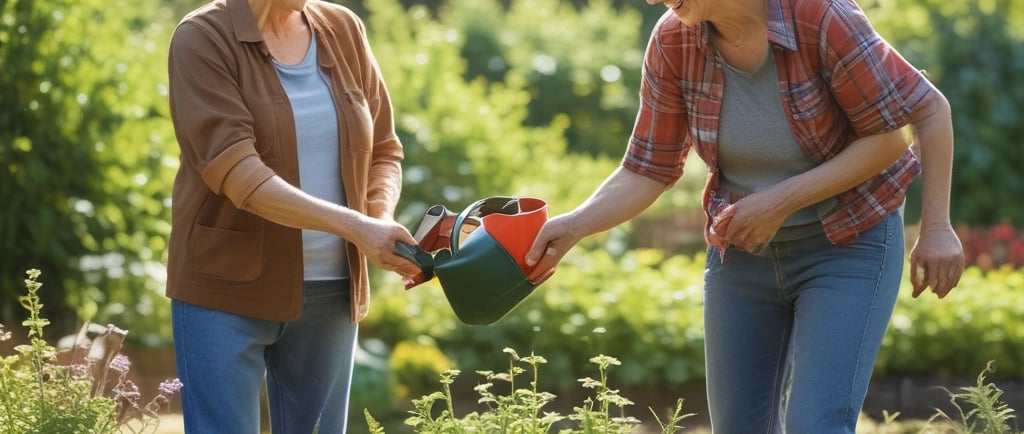
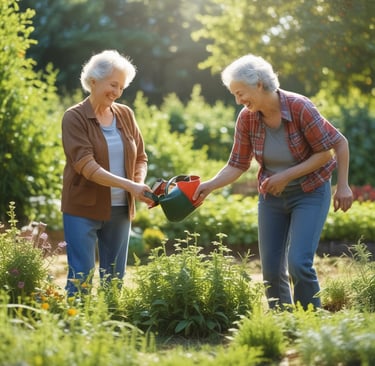
Community gardening
Church or civic volunteering
Informal caregiving
Even structured hobbies with social roles
The key ingredients:
Consistency
Social connection
Feeling useful
Not heroics.
Purpose, Cognitive Health & Dementia Risk
One of the most compelling areas of research connects purposeful living with brain health.
Older adults with strong sense of purpose show:
Slower cognitive decline
Better memory performance
Lower risk of Alzheimer’s-related outcomes
Why?
Because purpose:
Keeps the brain engaged
Encourages learning and adaptation
Reduces isolation (a major dementia risk factor)
Activates multiple brain networks at once
In short: the brain thrives on relevance.
Purpose vs. “Staying Busy” (Important Distinction)
This isn’t about filling time.
Scrolling all day? Busy.
Binge-watching? Busy.
But purpose involves:
Contribution
Responsibility
Connection
Meaning
Purpose says:
“Someone or something is better because I showed up.”
That’s the biological signal we’re after.
Purpose Pairs Beautifully With Movement
Here’s where this fits perfectly with Beat Age With Ease.
Purposeful activity naturally supports:
Walking
Lifting light loads
Balance
Coordination
Endurance
It’s movement with a reason.
Which is often easier to sustain than:
“Do this exercise because a study said so.”
A Purpose-First Longevity Week (Realistic Edition)
You don’t need to overhaul your life.
Try this mindset instead:
Ask one question:
“Where can I be useful this week?”
Then build around it.
One volunteer shift
One standing commitment
One regular role
One reason to leave the house
Layer in your:
10-minute Beat Age With Ease workout
Daily walking
Mobility snacks
Now you’re stacking:
movement + meaning + consistency
That’s a longevity trifecta.
Why This Matters After 60 (and Especially After Retirement)
Retirement removes structure.
Structure used to provide:
Purpose
Social contact
Daily movement
Identity
When it disappears, biology often follows.
Volunteering and purposeful roles replace that structure, without the stress.
Think of it as:
“Retirement 2.0 — with better posture.”
The Hidden Joy Factor (Don’t Skip This)
Beyond the biology, there’s something quieter happening.
People with purpose report:
Greater joy
Better mood
More laughter
Less anxiety about aging itself
Joy isn’t fluff.
Joy changes hormones.
Joy changes immune function.
Joy changes behavior.
Joy keeps people moving.
The Bottom Line
Aging well isn’t just about:
What you eat
How you move
Which supplements you take
It’s also about:
Why you move
Who you move for
Where you belong
Volunteering and purposeful engagement don’t just fill time — they protect biology.
They slow the slide.
They sharpen the mind.
They steady the body.
They warm the heart.
And best of all?
They remind your body that you’re still very much in the game.
© 2025. All rights reserved.
"Disclaimer: The fitness and exercise information provided on this website is intended for educational purposes only. It is not a substitute for professional medical advice, diagnosis, or treatment. Consult your physician or a qualified health provider before starting any exercise program. The use of any information provided on this site is solely at your own risk. We do not assume liability for any injuries or health issues that may result from using our content."