
Exercise Slows Aging at a Deep Biological Level
Research shows exercise slows biological aging by reducing inflammation, preserving muscle, and improving mitochondrial function. Learn how fitness after 50 protects longevity.
Bruce R Black
3/2/20263 min read

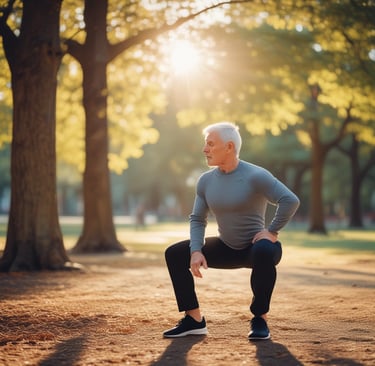
Exercise Slows Aging at a Deep Biological Level
What the Science Says About Moving Your Body After 50
Let’s clear something up right away.
Exercise does not make you younger.
It does something far more interesting.
It slows down how quickly you become older.
That’s not motivational fluff. That’s cellular biology.
Recent scientific reviews on aging and physical activity show that regular exercise doesn’t just strengthen muscles or help you fit into last year’s jeans. It influences multiple hallmarks of biological aging — the deep processes that determine how fast your cells wear down over time.
In plain English?
Your body ages on the inside.
Exercise slows that process down.
Let’s unpack what that actually means — without needing a PhD or a protein shake mustache.
Chronological Age vs. Biological Age
Chronological age is your birthday.
Biological age is how your cells are holding up.
Two 65-year-olds can have dramatically different biological profiles:
One has strong muscles, healthy mitochondria, low inflammation.
The other has muscle loss, higher inflammation, reduced metabolic flexibility.
Same candles. Different chemistry.
Exercise shifts the chemistry.
The “Hallmarks of Aging” (Yes, That’s a Real Term)
Scientists have identified several biological processes that drive aging. These include:
Chronic inflammation
Mitochondrial dysfunction
Cellular senescence (old cells hanging around causing trouble)
DNA damage accumulation
Loss of muscle mass (sarcopenia)
Impaired stress response
Here’s the exciting part:
Exercise positively affects nearly all of them.
Not one. Not two. Most of them.
That’s rare in biology.
1️⃣ Exercise Reduces Chronic Inflammation
Low-grade chronic inflammation is one of the biggest drivers of age-related disease.
It contributes to:
Heart disease
Cognitive decline
Type 2 diabetes
Arthritis
Frailty
Regular moderate exercise reduces inflammatory markers in the bloodstream.
It’s like lowering the background static in your system.
Less static = better cellular communication.
Better communication = better repair.
2️⃣ Exercise Protects Your Mitochondria
Your mitochondria are your cellular power plants.
As we age, mitochondria:
Become less efficient
Produce more oxidative stress
Generate less energy
Exercise stimulates mitochondrial biogenesis — which is science-speak for:
“Make more healthy mitochondria.”
More mitochondria means:
Better energy
Improved metabolic flexibility
Greater resilience
Translation: You don’t just feel more energetic — your cells are literally operating better.
3️⃣ Exercise Slows Muscle Loss (Which Is Critical After 50)
Sarcopenia — age-related muscle loss — accelerates after 50.
Muscle isn’t just cosmetic. It’s metabolic armor.
Strong muscles:
Regulate blood sugar
Support joint health
Improve balance
Protect against falls
Increase longevity
Resistance training and even moderate bodyweight work send a powerful message:
“Keep the muscle. We still use this.”
And the body listens.
4️⃣ Exercise Improves Insulin Sensitivity
Poor insulin sensitivity accelerates aging.
It contributes to:
Metabolic syndrome
Fat accumulation
Cardiovascular disease
Cognitive decline
Exercise increases insulin sensitivity almost immediately.
Even a brisk walk after meals improves blood sugar regulation.
This isn’t about weight loss.
It’s about metabolic health, which strongly predicts lifespan.
5️⃣ Exercise Improves Stress Resilience
Aging isn’t just physical. It’s stress-related.
Chronic stress speeds biological aging through:
Cortisol dysregulation
Immune suppression
DNA repair disruption
Exercise trains your stress response system.
It teaches your body:
“Stress comes. Stress goes. We adapt.”
That adaptability slows wear and tear over decades.
What Type of Exercise Slows Aging Best?
The honest answer?
A combination.
Research consistently supports a blend of:
Resistance training (2–3× per week)
Moderate aerobic activity (walking, cycling, swimming)
Balance and mobility work
Occasional higher-intensity bursts if tolerated
But here’s the secret most people miss:
Consistency matters more than intensity.
You don’t need to train like a 25-year-old.
You need to move like someone who plans to be 85 and independent.
How Much Exercise Is Enough?
Large-scale research suggests:
150 minutes per week of moderate activity
Or 75 minutes of vigorous activity
Plus 2 days of strength work
But here’s the encouraging part:
Even small amounts matter.
Five to ten extra minutes per day?
Beneficial.
Breaking up long sitting sessions?
Beneficial.
Adding short strength sessions?
Very beneficial.
Your biology rewards effort, not perfection.
Why This Matters for Active Agers
After 60, the body prioritizes efficiency.
If you don’t use something, it gets downgraded.
Muscle?
Downgraded.
Balance?
Downgraded.
Metabolic flexibility?
Downgraded.
Exercise says:
“Keep it. We’re still using it.”
And the body reallocates resources accordingly.
This is why fitness for seniors isn’t optional — it’s biological maintenance.
The Beat Age With Ease Approach
Here’s where your philosophy fits beautifully.
We don’t:
Crush joints
Chase exhaustion
Train through pain
We:
Use short, consistent sessions
Focus on joint-friendly strength
Include mobility and balance
Emphasize recovery
Your 10-minute workouts?
They are biologically meaningful.
Small daily signals compound into long-term cellular protection.
Can Exercise Reverse Aging?
This is where we stay honest.
Exercise doesn’t rewind time.
But it can:
Slow biological decline
Improve aging markers
Increase healthspan
Preserve independence
Reduce disease risk
Which is far more powerful than chasing youth.
We’re not trying to look 25.
We’re trying to function brilliantly at 75.
The Real Longevity Equation
The science keeps circling back to this:
Movement + strength + consistency = slower biological aging.
Not perfection.
Not extremes.
Not biohacking gadgets.
Just steady, purposeful motion.
Your cells don’t care about aesthetics.
They care about use.
Use tells them to maintain.
Maintenance slows decline.
Slower decline extends vitality.
The Bottom Line
Exercise doesn’t just build muscle.
It:
Reduces inflammation
Protects mitochondria
Preserves metabolic health
Enhances stress resilience
Maintains independence
At a deep biological level, movement is medicine.
Not because it makes you look younger.
Because it keeps your internal systems functioning longer.
So no, you’re not “just working out.”
You’re negotiating with time.
And every time you move, you improve the terms.
© 2025. All rights reserved.
"Disclaimer: The fitness and exercise information provided on this website is intended for educational purposes only. It is not a substitute for professional medical advice, diagnosis, or treatment. Consult your physician or a qualified health provider before starting any exercise program. The use of any information provided on this site is solely at your own risk. We do not assume liability for any injuries or health issues that may result from using our content."